IELTS Academic assesses whether you’re ready to begin studying or training in an environment where English is used. It’s accepted by over 11,500 universities and institutions globally.
IELTS General Training focuses on basic survival skills in broad social and workplace contexts. It’s ideal for people going to English-speaking countries for secondary education, work experience, or training programs. It’s also required for migration to Australia, Canada, New Zealand, and the UK.
Undergraduate degree applicants at international universities
Postgraduate and graduate program applicants (Master's, PhD)
Professionals seeking registration in English-speaking countries (doctors, nurses, engineers, architects)
Students applying for foundation or pathway programs
Anyone needing proof of academic English proficiency
Duration: 2 hours 45 minutes
Test Sections: Listening, Reading, Writing, Speaking
Score Range: Band 0-9
Validity: 2 years
Format Options: Paper-based or Computer-based
Results: 3-5 days (computer) or 13 days (paper)
11,500+ institutions worldwide
140+ countries accept IELTS
#1 English test for UK university admissions
Accepted by all Australian & New Zealand universities
3,400+ US institutions accept IELTS
Common IELTS Academic score requirements by program level
Most bachelor’s degree programs require a minimum overall score of 6.0-6.5, with no band less than 5.5-6.0
Master’s and PhD programs typically require 6.5-7.0 overall, with minimum 6.0-6.5 in each band
Competitive programs like medicine, law, and journalism often require 7.0-7.5 overall with higher individual band scores
Nursing, medicine, engineering registration bodies typically require 7.0+ with specific band requirements
Requirements vary significantly by institution and program. Always check specific requirements with your target universities. Some programs may require higher scores in specific bands (e.g., Writing for MBA programs).
Detailed breakdown of each test section
Duration: 30 minutes
Questions: 40 questions across 4 sections
Duration: 60 minutes
Questions: 40 questions across 3 sections
Duration: 60 minutes
Tasks: 2 writing tasks
Duration: 11-14 minutes
Format: Face-to-face interview with examiner
See what to expect in the IELTS General Training test
Passage Extract:
The Industrial Revolution, which began in Britain in the late 18th century, marked a major turning point in human history. Before this period, most goods were produced by hand in small workshops or at home. The introduction of machinery, particularly in textile manufacturing, transformed production processes and led to the establishment of factories. This shift from manual labor to machine-based manufacturing had profound effects on society, including rapid urbanization as workers moved from rural areas to cities seeking employment.
Question: The Industrial Revolution started in the early 19th century.
Answer: FALSE
Explanation: The passage states it “began in Britain in the late 18th century,” not the early 19th century.
Example Task:
[Bar Chart Image: Global smartphone sales 2019-2023]
Shows increasing trend from 1.2 billion (2019) to 1.8 billion (2023)
Task:The bar chart shows global smartphone sales between 2019 and 2023.
Summarize the information by selecting and reporting the main features, and make comparisons where relevant.
Write at least 150 words.
Sample Opening Paragraph:
The bar chart illustrates the global sales of smartphones over a five-year period from 2019 to 2023. Overall, there was a consistent upward trend in smartphone sales throughout this period, with total sales increasing by approximately 50%…
Example Task:
Some people think that universities should provide graduates with the knowledge and skills needed in the workplace. Others think that the true function of a university should be to give access to knowledge for its own sake, regardless of whether the course is useful to an employer.
What, in your opinion, should be the main function of a university?
Give reasons for your answer and include any relevant examples from your own knowledge or experience. Write at least 250 words.
Describe a book that had a major influence on you.
You should say:
• What the book was about
• When you read it
• Why it had an influence on you
• And explain how your thinking changed after reading it
You will have 1 minute to prepare and should speak for 2 minutes.
| Aspect | Academic | General Training |
|---|---|---|
| Purpose | University admissions, professional registration | Immigration, work, training programs |
| Reading Content | Academic texts from journals, books, research papers | Everyday texts, notices, advertisements, workplace documents |
| Reading Difficulty | Complex academic vocabulary and concepts | Practical, everyday vocabulary |
| Writing Task 1 | Describe graphs, charts, diagrams, processes | Write a letter (formal, semi-formal, or informal) |
| Writing Task 2 | Academic essay on abstract/intellectual topics | Essay on general interest topics |
| Listening | Identical for both tests | |
| Speaking | Identical for both tests | |
| Accepted By | Universities, professional registration bodies | Immigration departments, employers |
Read articles from The Economist, Scientific American, National Geographic, and academic journals. This familiarizes you with academic vocabulary and complex sentence structures.
Practice describing various types of visual data: line graphs, bar charts, pie charts, tables, processes, and maps. Learn standard phrases for trends, comparisons, and data analysis.
Use formal language, avoid contractions, maintain objective tone. Practice essay structures: introduction, body paragraphs with topic sentences, conclusion. Use cohesive devices effectively.
Focus on Academic Word List (AWL) - 570 word families common in academic texts. Learn synonyms, collocations, and context-appropriate usage. Use vocabulary in writing practice.
IELTS tests your ability to express ideas differently. Practice rewording sentences using synonyms and different grammatical structures. This is crucial for Reading and Writing.
Familiarize yourself with all Reading question types, especially True/False/Not Given vs Yes/No/Not Given. Each requires different strategies and understanding.
Reading: 20 minutes per passage. Writing: 20 minutes Task 1, 40 minutes Task 2. Practice under timed conditions to build speed and accuracy.
Part 3 requires discussion of abstract concepts. Practice explaining causes, effects, solutions, and expressing opinions on complex issues with supporting reasons.

Task 1 requires you to describe the main trends, significant features, and make comparisons. Simply listing all data points without highlighting key features results in lower scores.
Task 1 is purely descriptive. Never include personal opinions, reasons, or explanations for the data. Just describe what you see objectively.
Examiners can spot memorized essays. They assess your ability to respond to the specific task, not recall pre-written content. Focus on understanding essay structures instead.
Avoid contractions (don’t, can’t), phrasal verbs (get over, put up with), and informal expressions. Academic writing requires formal language throughout.
If a Reading question is difficult, move on and return later. Don’t let one question consume time needed for others. All questions carry equal marks.
In True/False/Not Given questions, “False” means the statement contradicts the passage, while “Not Given” means there’s no information. These are different answers.
Most universities require 6.0-7.0 overall for undergraduate programs and 6.5-7.5 for postgraduate programs. Competitive programs like medicine, law, and journalism may require 7.5+. Always check specific requirements with your target universities as they vary significantly.
Neither is inherently harder - they test different skills. Academic focuses on academic contexts with complex vocabulary and abstract topics, while General Training focuses on everyday situations. Choose based on your purpose, not perceived difficulty.
Some countries accept IELTS Academic for immigration (check with immigration authorities), but most require IELTS General Training. If you need IELTS for both university AND immigration, taking Academic typically satisfies both purposes, but verify with specific authorities.
Learn standard phrases for describing trends (increased, declined, fluctuated), comparisons (higher than, significantly more), and time periods. Practice with different visual types: line graphs, bar charts, pie charts, tables, processes, and maps. Focus on identifying and describing key features, not every detail.
For intermediate-level students (B2), 8-12 weeks of focused preparation is recommended. If you're at a lower level, plan for 4-6 months. Take a practice test first to assess your starting point and identify weak areas. Consistent daily practice is more effective than intensive last-minute cramming.
True/False/Not Given is used for factual information. Yes/No/Not Given is used for the writer's opinions or claims. "True/Yes" means the statement matches the passage. "False/No" means it contradicts the passage. "Not Given" means there's no information about it in the passage.
Both have identical content and difficulty. Computer-based offers: faster results (3-5 days vs 13 days), more test dates, easier editing for Writing, and automatic word count. Paper-based offers: familiar format if you prefer writing by hand. Choose based on personal preference and typing comfort.
Take the first step toward your university education with EECentre



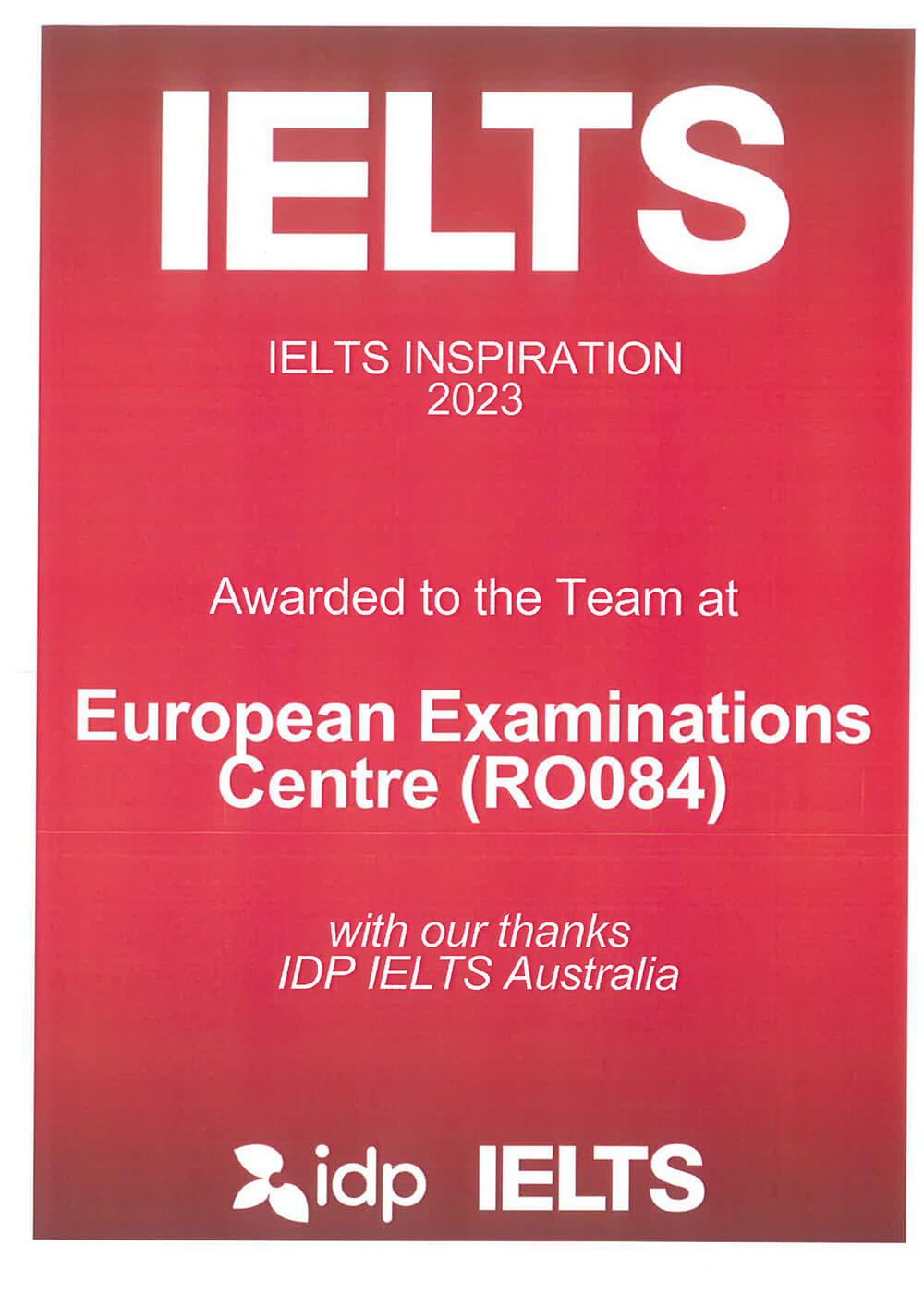
An internationally awarded exam centre delivering trusted examination services